Outdoor Lighting systems operate in some of the most challenging environments compared to any other lighting application. Unlike indoor installations, Outdoor Lighting fixtures are constantly exposed to rain, dust, humidity, wind-driven particles, pollution, insects, and extreme temperature variations. Because of these conditions, selecting the correct IP rating is not a secondary specification—it is a fundamental design requirement that directly affects safety, performance, reliability, and lifecycle cost.
Choosing the wrong IP rating for Outdoor Lighting often leads to premature failure, electrical hazards, and increased maintenance expenses. This article provides a detailed explanation of IP ratings, their practical meaning, and how to correctly select the appropriate protection level for different Outdoor Lighting applications.
1. Understanding IP Rating Standards
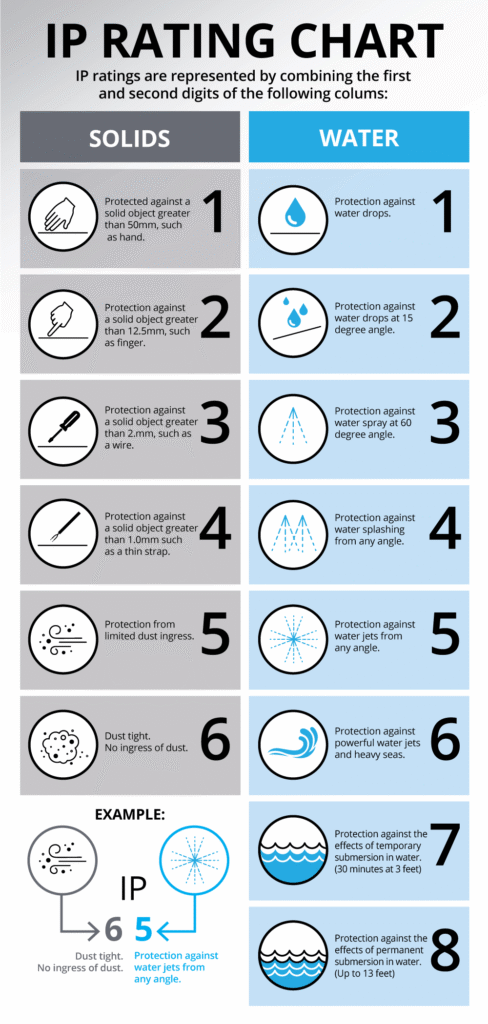
An IP rating (Ingress Protection rating) is defined by the international standard IEC 60529. It classifies the degree of protection provided by an enclosure against the intrusion of solid objects and liquids.
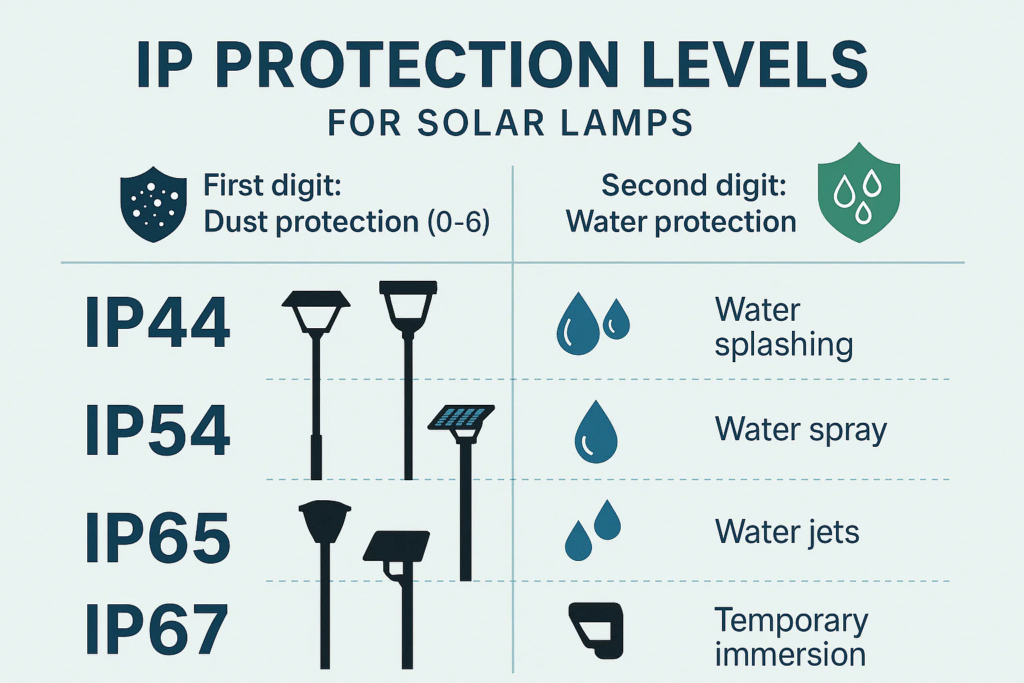
The IP code consists of two digits:
- First digit (0–6): Protection against solid particles such as dust and debris
- Second digit (0–9): Protection against water exposure
For Outdoor Lighting, both protection aspects are equally critical because fixtures are installed in uncontrolled environments where exposure is continuous and unavoidable.
2. Why IP Rating Is a Core Requirement in Outdoor Lighting
Outdoor Lighting systems are expected to operate reliably for years without frequent intervention. Moisture or dust penetration can damage internal drivers, LED modules, and electrical connections.
Correct IP rating selection in Outdoor Lighting ensures:
- Safe operation under wet conditions
- Protection against dust accumulation that reduces heat dissipation
- Stable electrical insulation
- Reduced corrosion of internal components
- Consistent light output over time
A fixture with insufficient ingress protection may fail even if it uses high-quality LEDs.
3. Solid Particle Protection in Outdoor Lighting (First IP Digit)
The first digit of the IP rating defines resistance to solid objects and dust.
Key levels relevant to Outdoor-Lighting include:
- IP5X: Partial dust protection, allowing limited ingress without harmful effects
- IP6X: Complete dust-tight protection
Dust ingress is a major concern in Outdoor-Lighting installations near roads, deserts, construction sites, and industrial areas. Dust accumulation inside fixtures can block ventilation paths and increase internal temperature, reducing LED lifespan.
For long-term reliability, most Outdoor-Lighting installations should meet at least IP5X standards, while harsh environments require IP6X.
4. Water Protection Levels for Outdoor Lighting (Second IP Digit)
Water exposure varies widely depending on installation location. Outdoor-Lighting fixtures may face rainfall, condensation, water jets during cleaning, or even temporary flooding.
Relevant water protection levels include:
- IPX4: Protection against splashing water
- IPX5: Protection against low-pressure water jets
- IPX6: Protection against strong water jets
- IPX7: Temporary immersion in water
- IPX8: Continuous immersion
For fully exposed Outdoor-Lighting, IPX4 is insufficient. Fixtures must be capable of resisting direct rainfall and cleaning procedures without water ingress.
5. Most Common IP Ratings Used in Outdoor Lighting
IP65 – Standard Outdoor Lighting Protection
- Dust-tight
- Resistant to water jets
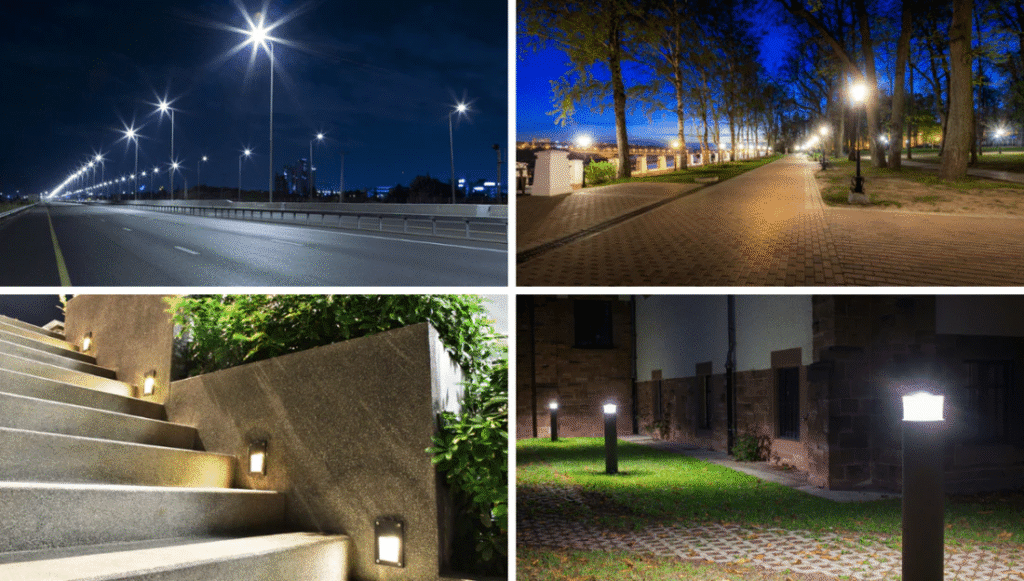
- Suitable for streets, roadways, façades, and parking areas
IP65 is widely accepted as the minimum protection level for general Outdoor-Lighting installations.
IP66 – Enhanced Protection
- Dust-tight
- Resistant to powerful water jets
- Ideal for highways, coastal zones, and industrial outdoor environments
IP67 – Specialized Outdoor Applications
- Dust-tight
- Resistant to temporary immersion
- Suitable for landscape lighting, in-ground fixtures, and flood-prone areas
Choosing a higher IP rating than required adds a safety margin and improves system durability.
6. Environmental Factors Affecting IP Rating Selection
Outdoor-Lighting design must account for site-specific environmental conditions, including:
- Rain intensity and direction
- Wind-driven dust and sand
- Humidity levels
- Salt exposure in coastal areas
- Cleaning methods such as pressure washing
For example, Outdoor-Lighting near the sea requires higher protection due to salt corrosion, even if rainfall is moderate.
7. IP Rating and Electrical Safety in Outdoor Lighting
Water ingress poses serious electrical risks. Moisture inside Outdoor Lighting fixtures can cause:
- Short circuits
- Insulation breakdown
- Electric shock hazards
- Fire risk
Higher IP ratings protect internal electrical components and help ensure compliance with safety regulations and municipal standards.
8. IP Rating vs. Fixture Construction Quality
While IP rating defines protection level, fixture construction determines how well that rating is maintained over time.
High-quality Outdoor-Lighting fixtures include:
- Sealed cable glands
- UV-resistant gaskets
- Corrosion-resistant aluminum or stainless-steel housings
- Proper thermal pathways to avoid condensation buildup
A poorly manufactured fixture may technically meet IP requirements initially but fail prematurely in real conditions.
9. Impact of IP Rating on Maintenance and Lifecycle Cost
Correct IP rating selection significantly reduces maintenance needs.
Benefits include:
- Less internal cleaning
- Reduced component replacement
- Longer inspection intervals
- Lower total cost of ownership
Outdoor-Lighting systems with inadequate IP protection often require frequent servicing, increasing operational costs.
10. Common IP Rating Selection Mistakes in Outdoor Lighting
Typical errors include:
- Using IP44 fixtures in exposed Outdoor-Lighting installations
- Ignoring dust protection in dry climates
- Overlooking cleaning pressure during maintenance
- Selecting IP rating based on cost rather than environment
Avoiding these mistakes ensures long-term reliability and performance.
11. Matching IP Rating to Outdoor Lighting Applications
Recommended IP ratings by application:
- Road and street lighting: IP65 or IP66
- Parking areas and plazas: IP65
- Landscape and in-ground lighting: IP67
- Coastal and industrial zones: IP66 or higher
Each Outdoor-Lighting application requires a tailored protection level.
Conclusion
Selecting the correct IP rating is a critical step in Outdoor-Lighting design. It ensures safe operation, protects electrical components, and maintains performance under harsh environmental conditions. While higher IP ratings may slightly increase upfront cost, they dramatically reduce failure risk, maintenance frequency, and long-term expenses.
A well-selected IP rating protects Outdoor-Lighting investments and guarantees reliable illumination for years of continuous operation.