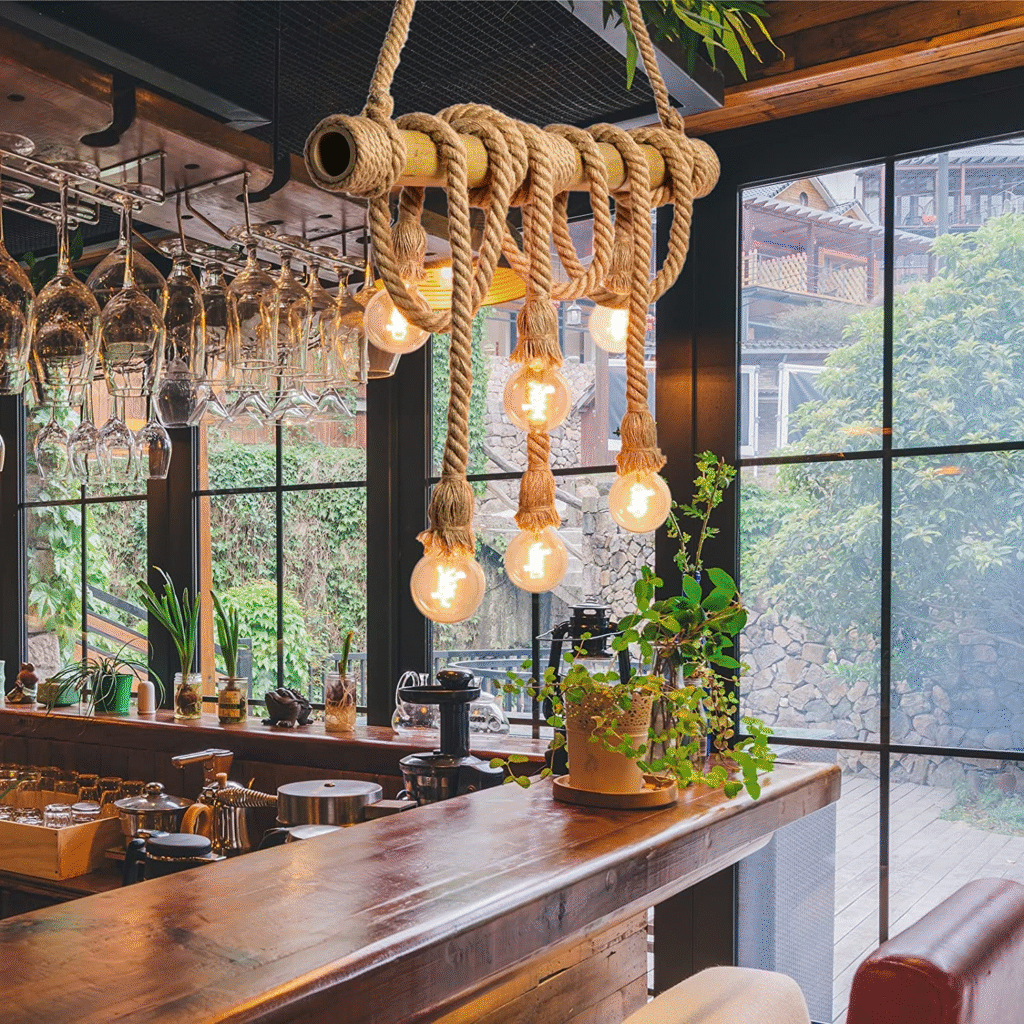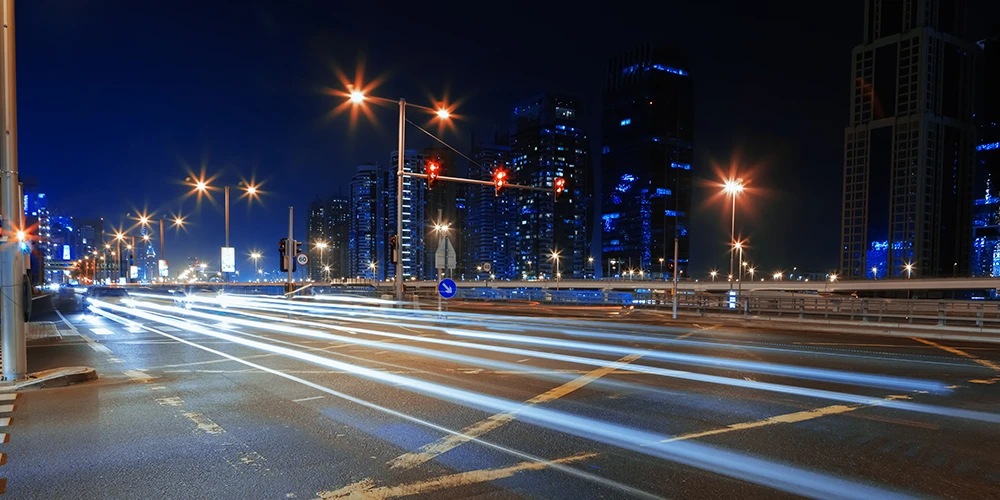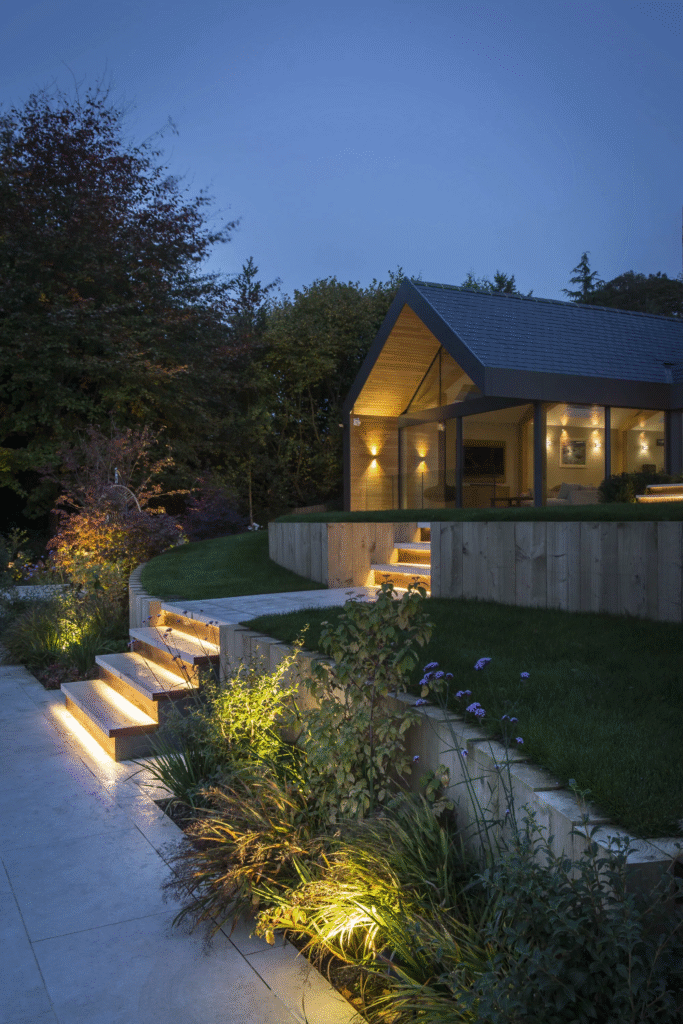
Outdoor spaces are no longer used only during daylight.
Modern homes, hotels, and public areas rely on smart Landscape Lighting to extend usability after sunset.
Well-designed garden lighting improves safety, enhances beauty, and increases property value.
In 2025, Landscape Lighting combines design creativity with energy-efficient LED technology.
Why Landscape Lighting Matters in Modern Outdoor Design
Proper Landscape Lighting provides:
- Safe walkways and pathways
- Highlighted trees and architectural features
- Enhanced security
- Extended evening usability
Poor outdoor lighting can create dark zones, glare, and unnecessary energy waste.
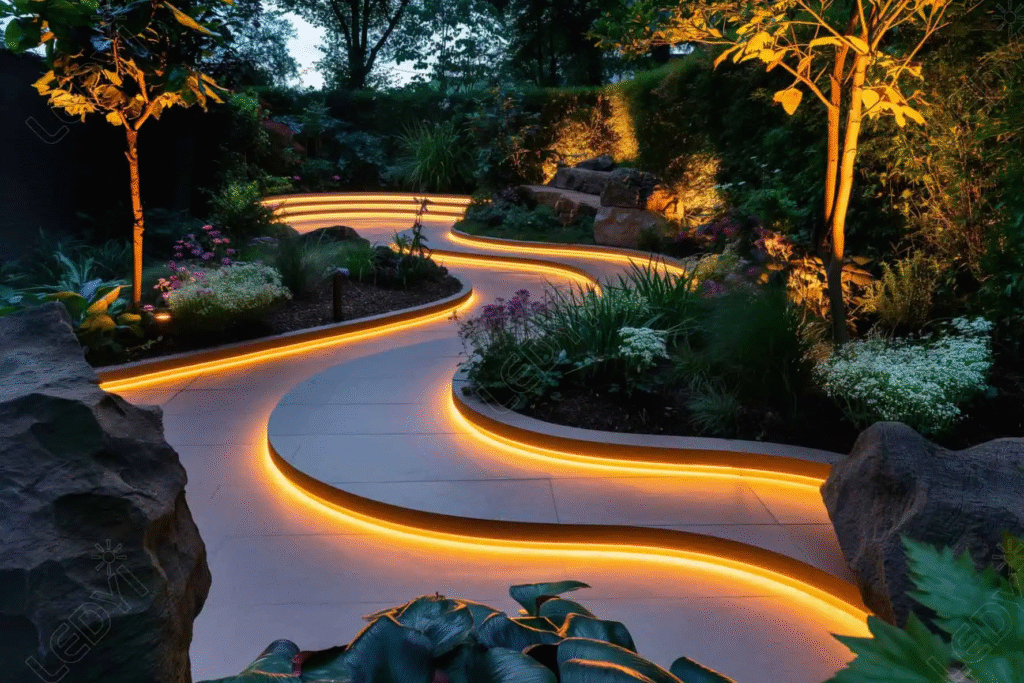
1️⃣ Pathway Lighting for Safety
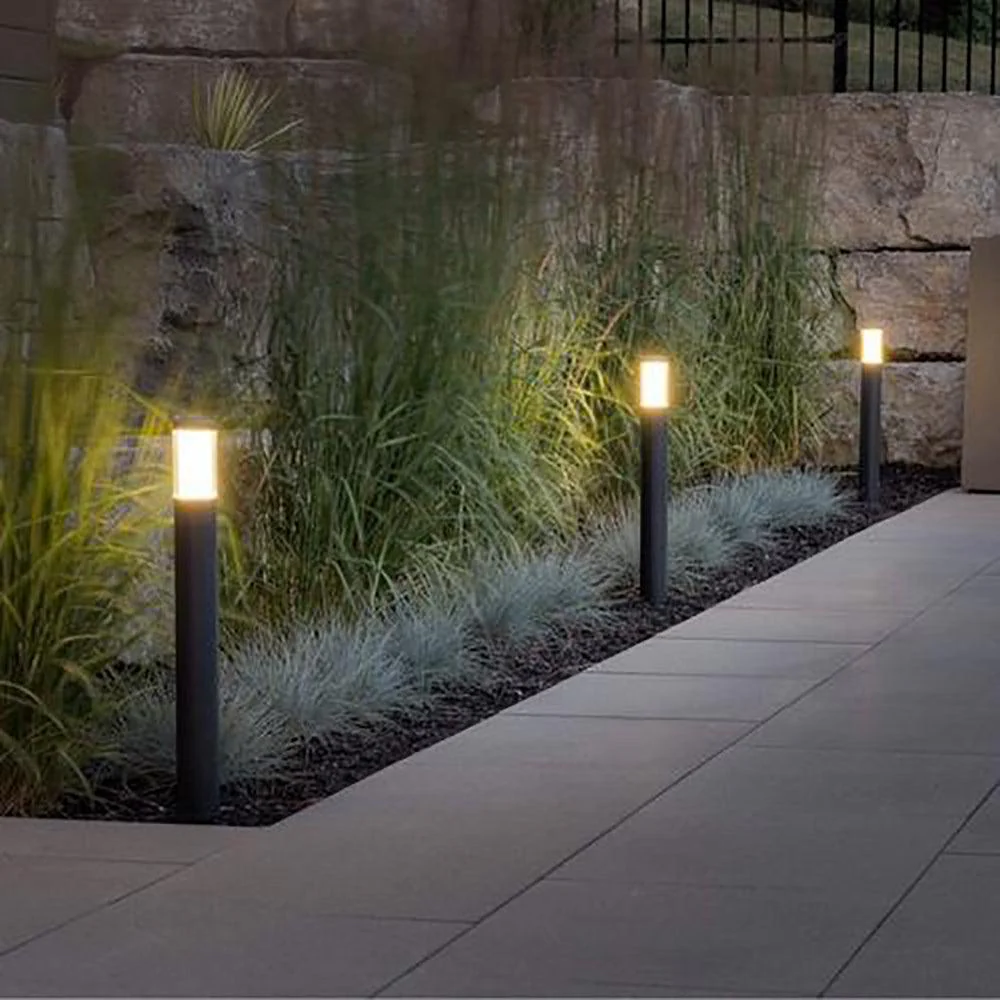
Walkway fixtures guide movement and prevent accidents.
Key considerations:
- Low-glare LED bollards
- Uniform spacing
- Warm color temperature (2700K–3000K)
Proper pathway Landscape Lighting ensures safety without over-illumination.
2️⃣ Accent Lighting for Trees and Plants
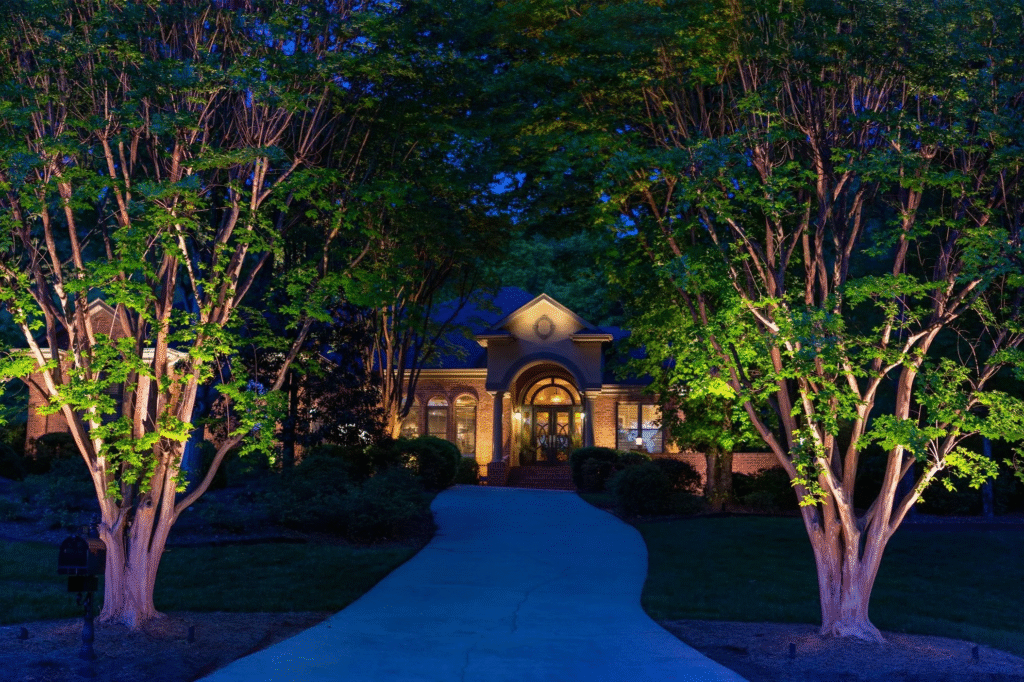
Uplighting highlights:
- Palm trees
- Feature plants
- Sculptures
- Water features
Use narrow beam angles for dramatic effects.
Accent Landscape Lighting adds depth and dimension to gardens.
3️⃣ Wall Washing for Architectural Beauty
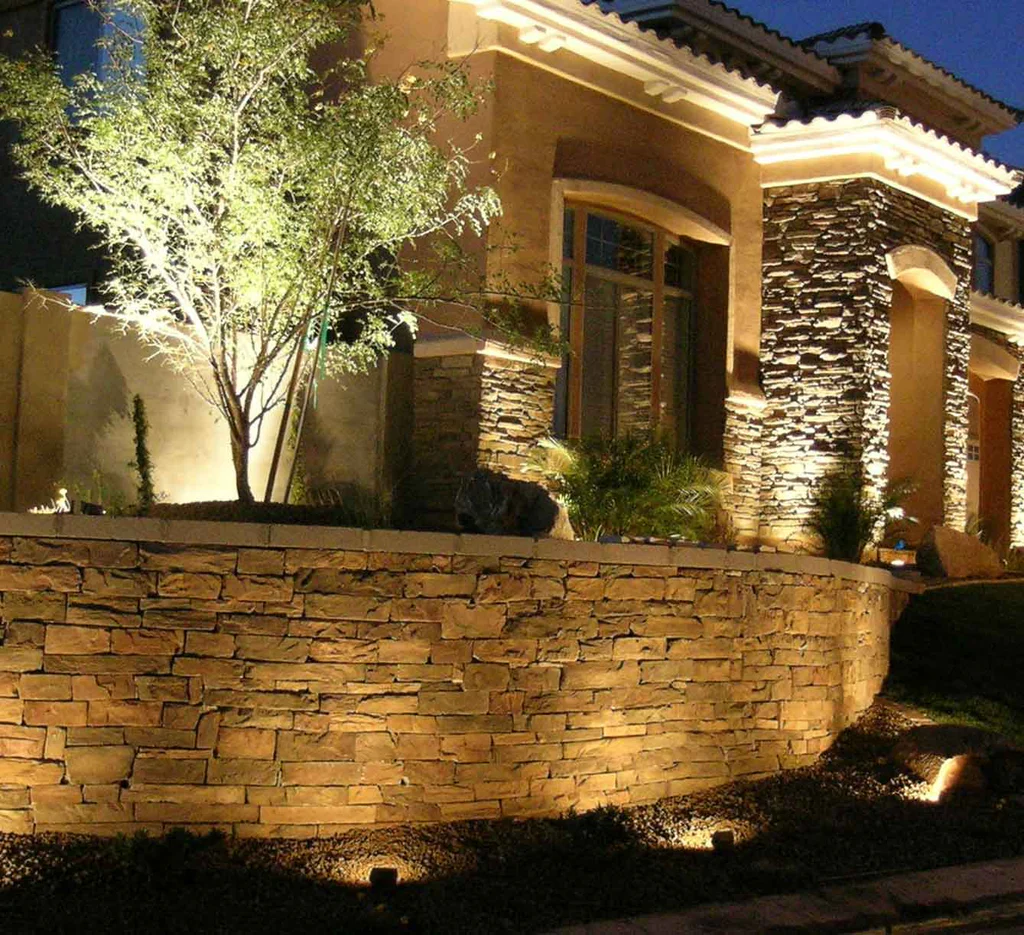
Wall-mounted fixtures can:
- Create soft light gradients
- Emphasize textures
- Enhance building facades
Balanced wall washing improves visual harmony in residential and commercial projects.
4️⃣ Spot Lighting for Focal Points
Spotlights help emphasize:
- Garden statues
- Entry gates
- Fountain areas
Adjustable beam LED spotlights provide flexibleExterior landscape Illumination control.
5️⃣ Deck and Step Lighting
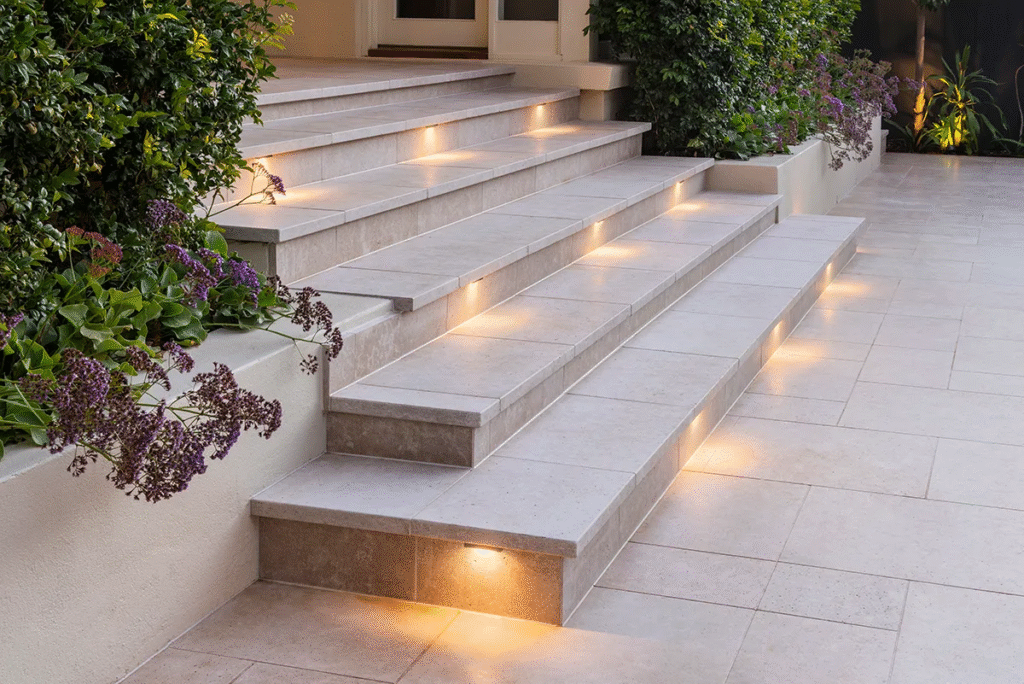
Integrated LED strips or recessed fixtures improve:
- Stair visibility
- Terrace ambiance
- Outdoor dining experience
This type of Exterior landscape Illumination enhances both safety and atmosphere.
6️⃣ Security Lighting Without Harsh Glare
Outdoor security requires:
- Motion sensor integration
- Proper beam angles
- IP65 or IP66 protection
Efficient LED flood lights provide coverage without excessive brightness.
Security-focused Exterior landscape Illumination improves protection while maintaining comfort.
7️⃣ Energy-Efficient and Solar Solutions
Modern systems use:
- High-efficiency LED drivers
- Low wattage fixtures
- Solar-powered garden lights
Energy optimization reduces operating costs while maintaining performance.
Smart Exterior landscape Illumination design balances beauty with sustainability.
Engineering Considerations for Outdoor Lighting
Outdoor environments require:
- IP65/IP66 water resistance
- Corrosion-resistant aluminum housing
- Wide operating temperature ranges
- UV-resistant materials
Choosing engineered fixtures ensures long-term durability in Exterior landscape Illumination applications.
Functional vs Aesthetic Balance
Effective Exterior landscape Illumination combines:
- Functional safety illumination
- Decorative ambiance
- Energy efficiency
- Environmental durability
Balanced lighting creates inviting outdoor spaces without energy waste.
Frequently Asked Questions
What color temperature is best for Landscape Lighting?
Choosing the right color temperature in Landscape Lighting directly affects the overall appearance and atmosphere of a garden.
For most residential projects, the preferred options are:
- 2700K → Very warm light similar to candlelight
- 3000K → Warm natural tone that enhances plant colors
Why avoid 4000K or higher?
- Cool white light can make plants appear dull
- It creates sharp contrast that feels visually harsh
- It reduces the natural warmth of outdoor environments
There are exceptions:
- Modern architectural landscapes may use 3500K
- Large commercial spaces may require 4000K for higher visibility
General rule:
The more natural the environment, the warmer the light should be in Landscape Lighting.
Is solar Landscape Lighting reliable?
Solar-based Landscape Lighting systems have significantly improved in recent years.
In sunny climates, they are highly effective for:
- Walkways
- Decorative garden accents
- Small residential gardens
- Areas far from electrical connections
However, performance depends on:
- Battery capacity
- Solar panel quality
- Daily sunlight exposure
- Ambient temperature
For large-scale projects or locations requiring full-night illumination, grid-connected or hybrid systems are often more reliable.
Solar lighting is dependable when selected appropriately within a Landscape Lighting design.
How many lumens are needed for pathways?
The required lumen output in Landscape Lighting depends on:
- Pathway width
- Fixture spacing
- Ground surface color
- Safety requirements
Typical guidelines:
- 100–150 lumens per fixture for residential garden paths
- 200–300 lumens for commercial or public walkways
- 300+ lumens in high-traffic areas
Brightness alone is not the key factor.
Light distribution matters more.
Uniform illumination reduces shadows and improves visibility.
Excessively bright fixtures may cause glare and reduce visual comfort.
In professional Landscape Lighting design, engineers calculate:
- Fixture spacing
- Beam angle
- Mounting height
Not just wattage.
Does Landscape Lighting increase property value?
Yes, when properly designed.
The impact depends on whether the Landscape Lighting system is:
- Balanced
- Professionally planned
- Energy efficient
- Architecturally integrated
Outdoor lighting:
- Enhances nighttime aesthetics
- Improves perceived security
- Extends outdoor usability
- Increases market appeal
In premium residential developments, exterior lighting is considered a key visual asset.
However, over-lighting can produce the opposite effect and increase energy consumption without adding value.
Conclusion
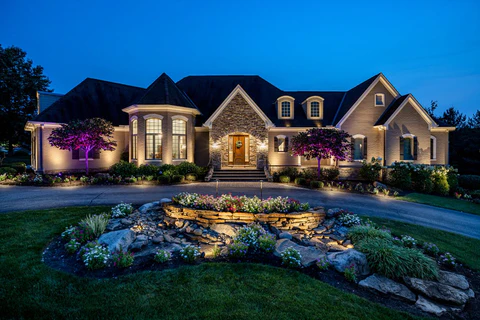
Smart Landscape lighting transforms gardens into safe, elegant, and functional outdoor environments.
Combining LED efficiency, proper beam control, and durable materials ensures long-lasting performance.
Contact Falcon today to get a customized Landscape lighting solution for your project.
🌐 Website: https://falcontgroup.com/
📞 Phone: 01001458515
Sources
- IES Lighting Handbook
- U.S. Department of Energy – Outdoor LED Lighting
- International Energy Agency – Energy Efficiency
- CIE Lighting Standards