Lighting as a Key Element in Open Office Design
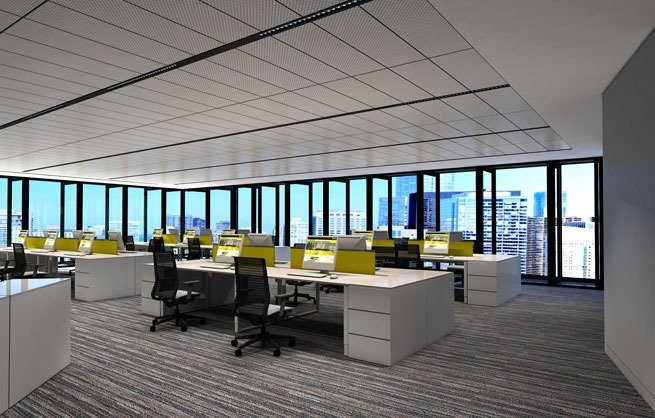
Choosing LED lighting for open offices is no longer limited to installing general lighting units; it has become a central part of interior design and architectural planning. Today, lighting is considered a strategic tool used to create a balanced work environment that supports focus, collaboration, and employee well-being.
LED lighting for open offices is especially important because open layouts depend heavily on the quality and uniformity of light to ensure both visual comfort and energy savings.
Open offices, which rely on wide spaces free of traditional barriers, have become the dominant trend in modern workplaces because they enhance communication between teams and encourage creativity. However, this design carries unique challenges in lighting: large and open spaces require precise light distribution to avoid shadows and dark areas while minimizing glare caused by reflections on screens or glass surfaces.
This is where LED lighting for open offices proves its importance as the ideal solution, offering:
- Uniform light distribution: prevents differences between office areas.
- Flexibility in design: can be integrated into suspended ceilings or decorative pendant lights.
- Smart control: with intelligent lighting systems that adjust brightness or color temperature based on the task or time of day.
- Long-term visual comfort: thanks to low UGR and flicker-free lighting.
- Energy efficiency: making it more economical and sustainable than traditional systems.
In short, lighting is no longer just a way to brighten up the space; it has become both an architectural and psychological tool for managing the workplace. In open offices, carefully planned LED lighting for open offices can enhance teamwork, boost productivity, and reduce stress and fatigue in the long run.
1. Color Rendering Index (CRI)
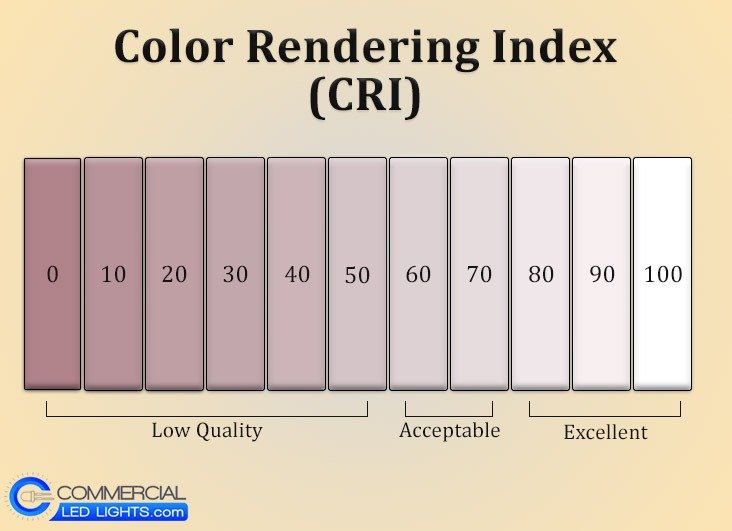
One of the most important factors in open office lighting is the CRI. The higher this index, the better the light shows natural colors accurately. This is crucial in environments requiring visual precision such as design or presentations. LED lighting for open offices offers a high CRI of 90+, making it ideal for professional use.
2. Correlated Color Temperature (CCT)
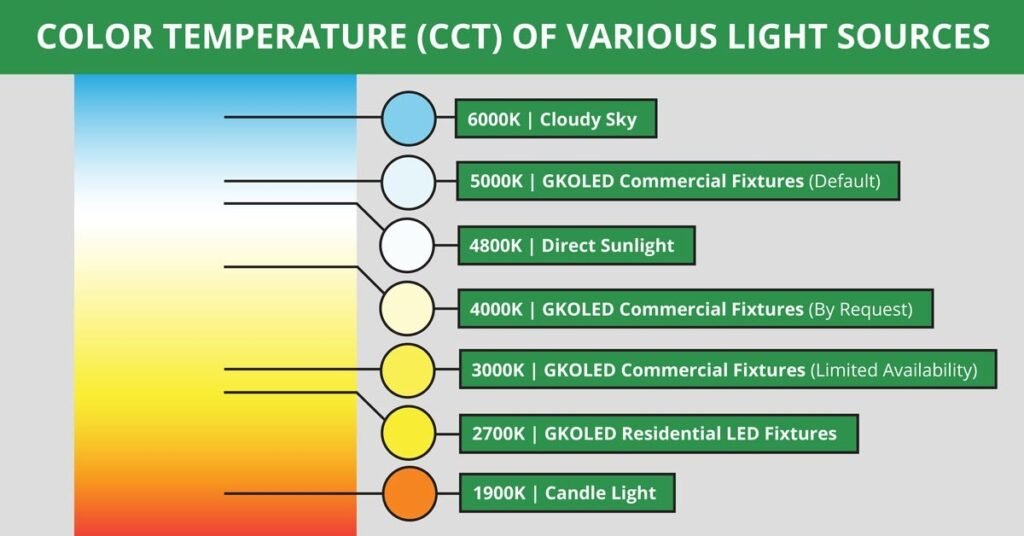
CCT defines whether the light is warm, neutral, or cool. In open offices, neutral or cool white (4000K–5000K) is usually preferred because it:
- Increases alertness and focus.
- Reduces drowsiness.
- Maintains a professional atmosphere.
LED lighting for open offices provides a wide range of CCT options that can be adjusted according to the activity or time of day.
3. Unified Glare Rating (UGR)
Lighting with a low UGR value (below 19) is ideal for open offices. It reduces direct glare and reflections on screens or glossy surfaces, enhancing visual comfort and preventing issues like headaches and eye strain. This makes LED lighting for open offices the perfect choice for a visually balanced workspace.
4. Energy Efficiency
One of the greatest advantages of LED lighting for open offices is its high energy efficiency. Compared to conventional systems, LED technology delivers:
- Up to 60% reduction in electricity use.
- Lower carbon emissions, making it eco-friendly.
- Longer lifespan, reducing maintenance and replacement costs.
5. Special Lighting Needs in Open Offices
Unlike traditional offices, open workspaces have unique requirements. LED lighting for open offices addresses these needs through:
- Uniform light distribution to avoid dark spots.
- Glare reduction thanks to advanced optical design.
- Smart controls with dimming and sensors.
- Flexible lighting adaptable for meetings, individual focus, or group collaboration.
Falcon Recommended Product: SLIM LED PANEL LIGHT – Non Flicker
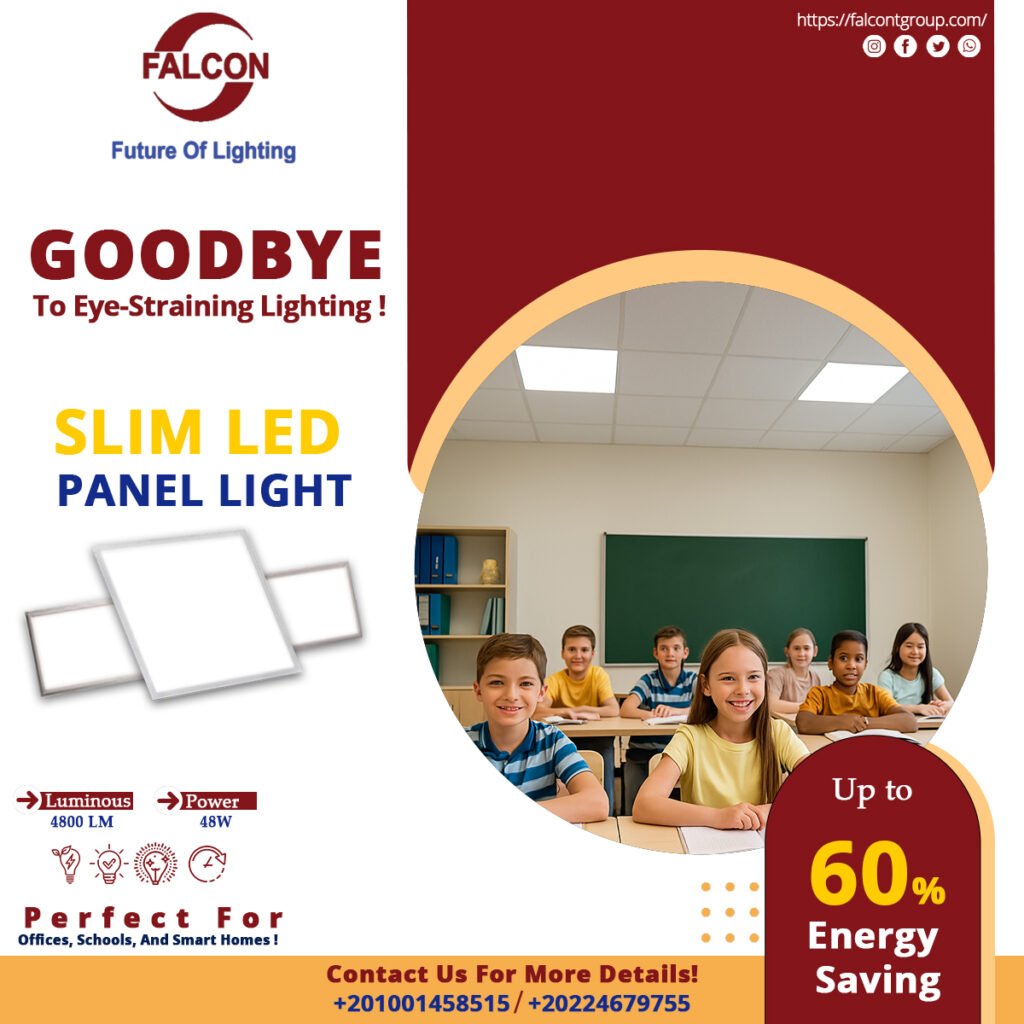
Among the available solutions, Falcon offers an ideal option for open offices: the SLIM LED PANEL LIGHT – Non Flicker.
Features include:
- Uniform flicker-free lighting for eye comfort.
- High energy efficiency.
- Modern slim design suitable for open offices.
- Low UGR levels for maximum visual comfort.
This product embodies the key standards that any modern LED lighting for open offices system should meet.
Frequently Asked Questions
Q1: Why is LED lighting for open offices the best option?
Because it provides uniform coverage of large spaces, reduces operating costs through up to 60% energy savings, offers a long 50,000-hour lifespan, and ensures greater visual comfort.
Q2: What role do CRI and CCT play?
- High CRI = more natural, accurate colors that reduce errors and increase efficiency.
- CCT (4000K–5000K) = a balance between comfort and focus.
Q3: How does Falcon help?
The Falcon Slim LED Panel Light delivers flicker-free illumination, uniform distribution, perfect glare control, and high energy efficiency—making it one of the best LED lighting for open offices solutions.
Q4: How should lighting be distributed in open offices?
Evenly, with stronger lighting for individual desks and softer lighting for meeting or lounge areas.
Q5: Is smart lighting necessary in open offices?
Not mandatory, but highly valuable for automatic brightness control, daylight sensing, and scheduling to cut costs and improve comfort.
Conclusion – Lighting Designed for Comfort and Productivity
The best LED lighting for open offices balances visibility, reduces eye strain, and saves energy. By optimizing CRI, CCT, UGR, and efficiency, companies can create a healthy workplace that drives productivity and creativity. Falcon Slim LED Panel Light is the ultimate solution to achieve these standards.