Choosing LED lighting is often perceived as a simple upgrade, but in reality, wattage selection is one of the most critical and frequently misunderstood aspects of lighting design. Many energy losses occur not because LED technology is inefficient, but because the wrong wattage is selected for the application. Selecting the Right LED Wattage ensures visual comfort, operational efficiency, and long-term cost savings while preventing unnecessary energy waste.
This article provides a detailed, practical explanation of how to determine the Right LED Wattage based on real lighting requirements rather than outdated assumptions.
1. Why Wattage Is Not a Measure of Brightness
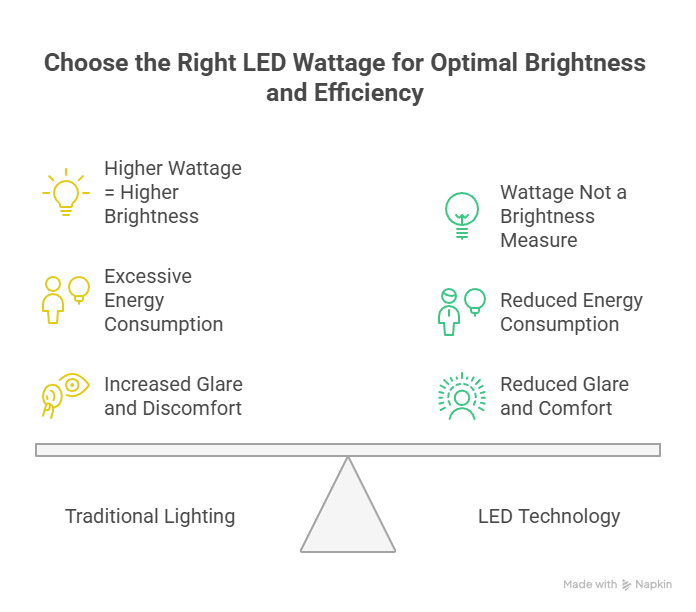
Wattage only indicates how much electrical power a fixture consumes. It does not represent how bright the light is. In traditional lighting, higher wattage was associated with higher brightness, but this relationship no longer applies to LED technology.
Relying on wattage alone leads to:
- Overpowered lighting systems
- Excessive energy consumption
- Increased glare and discomfort
- Reduced lighting efficiency
Understanding this distinction is the first step toward choosing the Right LED Wattage.
2. Lumens as the True Indicator of Light Output
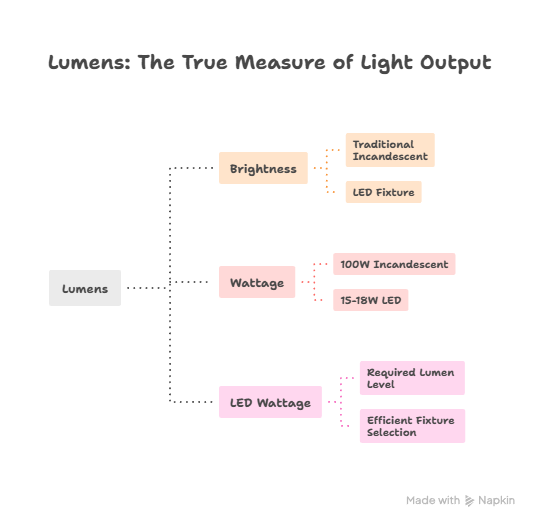
Brightness is defined by lumens, not watts. Lumens measure the amount of visible light produced by a fixture.
For example:
- A traditional 100W incandescent lamp produces around 1600 lumens
- An LED fixture may produce the same light using 15–18W
To identify the Right LED Wattage, lighting designers first determine the required lumen level for the space and then select a fixture that delivers those lumens efficiently.
3. Application-Based Wattage Selection

Different environments require different lighting levels. Selecting the Right LED Wattage depends on the function of the space rather than its size alone.
Typical applications include:
- Offices requiring balanced light for reading and screen use
- Warehouses needing high visibility for safety
- Corridors needing guidance lighting without excessive brightness
- Retail spaces requiring focused illumination for displays
Using higher wattage than required does not improve functionality and results in wasted energy.
4. Fixture Efficiency and Light Distribution
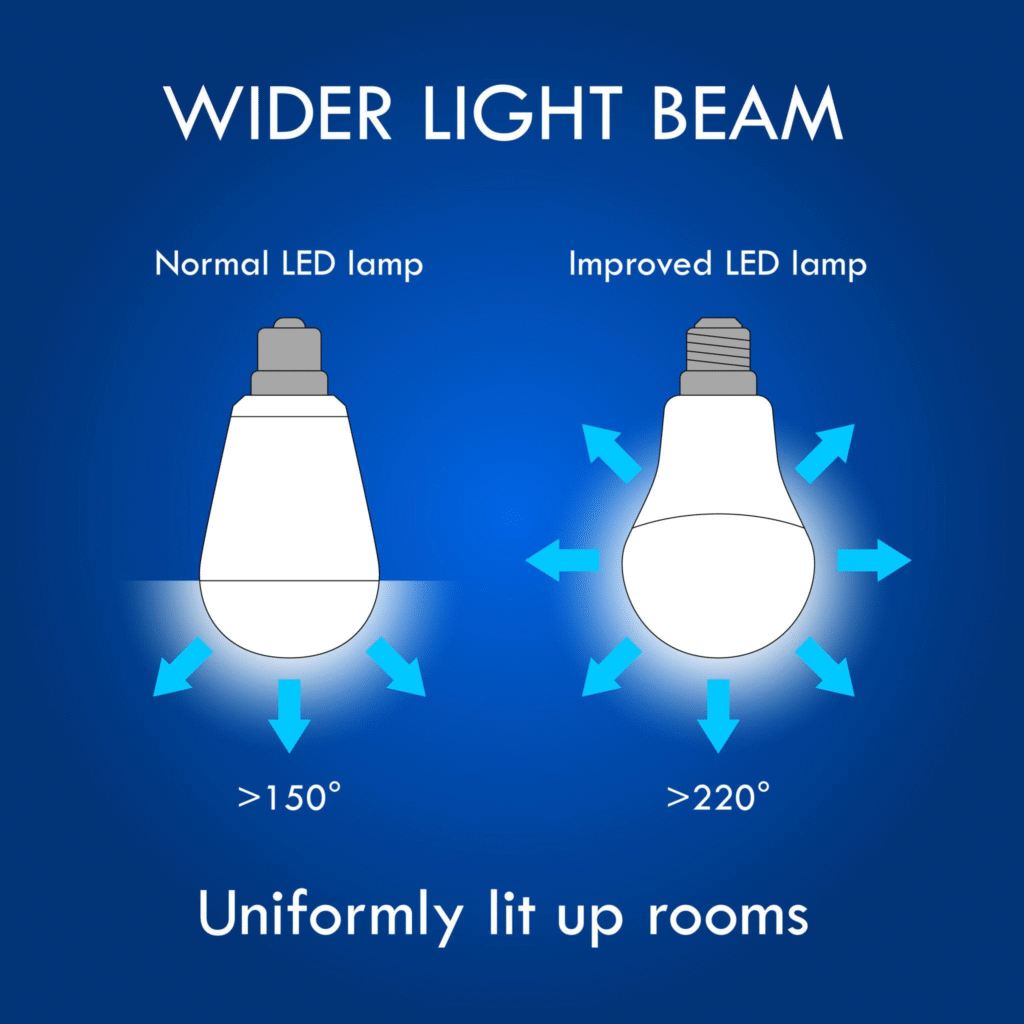
Two LED fixtures with identical wattage can deliver completely different results due to efficiency and optical design.
High-performance fixtures:
- Convert more electrical energy into usable light
- Use lenses and reflectors to direct light effectively
- Minimize light loss outside the target area
Selecting the Right LED Wattage always involves evaluating fixture efficacy, not just power input.
5. Ceiling Height and Mounting Conditions
Mounting height plays a major role in wattage selection. Higher ceilings require higher lumen output, but poor optical control often leads to unnecessarily high wattage.
Key factors include:
- Ceiling height
- Fixture spacing
- Beam angle
- Surface reflectance
By matching optics and layout, the Right LED Wattage can often be lower than expected without sacrificing illumination quality.
6. Preventing Over-Lighting and Visual Discomfort

Over-lighting is a common issue in LED installations. Excessive wattage creates glare, uneven brightness, and visual fatigue.
Common signs of over-lighting:
- Harsh reflections on surfaces
- Eye strain during prolonged exposure
- Difficulty focusing on tasks
Choosing the Right LED Wattage creates a comfortable visual environment while minimizing energy waste.
7. Energy Waste Caused by Incorrect Wattage
Energy waste often comes from selecting wattage as a safety margin rather than as a calculated requirement.
Incorrect wattage selection leads to:
- Higher electricity bills
- Increased cooling demand
- Reduced system efficiency
When the Right LED Wattage is chosen correctly, energy consumption aligns with actual lighting needs.
8. Role of Lighting Controls in Wattage Optimization
Lighting controls complement proper wattage selection. Even when the Right LED Wattage is used, controls further reduce waste.
Effective solutions include:
- Dimming systems for task-based lighting
- Occupancy sensors to avoid lighting empty spaces
- Daylight sensors to reduce output during daylight hours
Controls ensure that wattage is used only when and where it is needed.
9. Avoiding Direct Wattage Replacement Mistakes
One of the most common errors is replacing traditional fixtures with LED units of similar wattage.
A correct approach involves:
- Comparing lumen output
- Evaluating fixture efficiency
- Reducing wattage accordingly
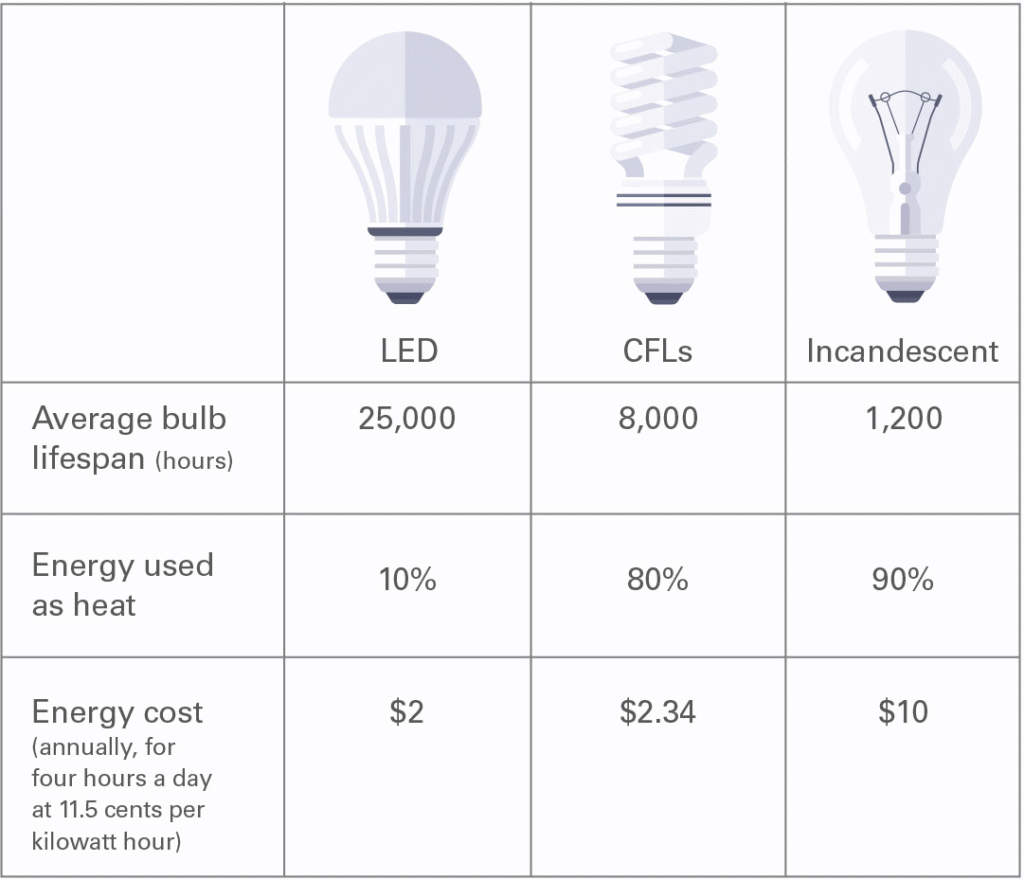
Selecting the Right LED Wattage usually results in significant power reduction compared to traditional systems.
10. Long-Term Cost Impact of Proper Wattage Selection
Incorrect wattage selection increases costs over time through:
- Higher energy consumption
- Shortened component lifespan
- Increased maintenance
Choosing the Right LED Wattage ensures:
- Stable long-term performance
- Lower operational expenses
- Extended fixture life
The initial decision directly affects total cost of ownership.
Conclusion
Selecting the Right LED Wattage is a technical decision with long-term consequences. Wattage should never be chosen based on habit or assumptions carried over from traditional lighting. By focusing on lumen requirements, fixture efficiency, application needs, and control strategies, it is possible to achieve excellent lighting performance without energy waste.
The right wattage delivers efficient light, visual comfort, and lasting value—nothing more and nothing less.