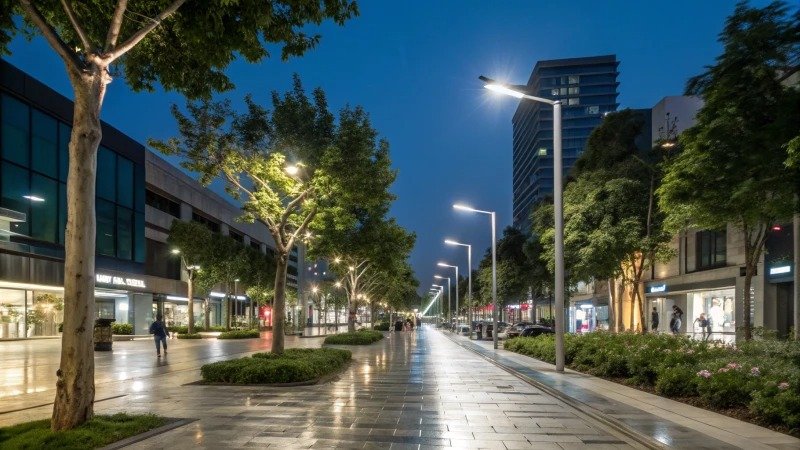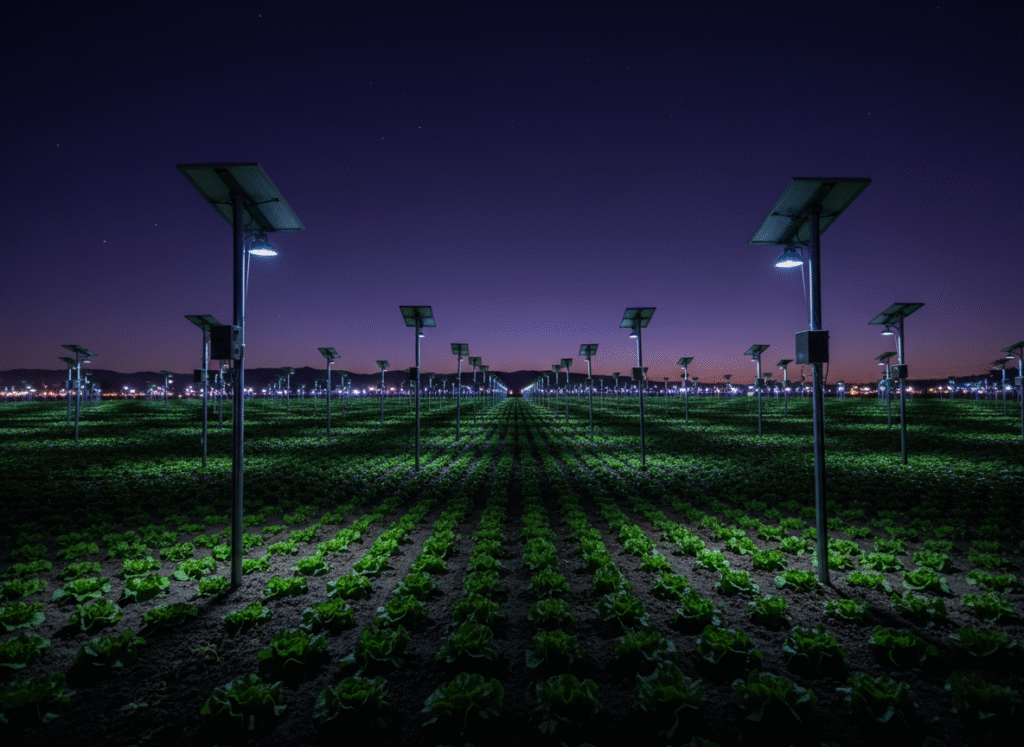
Modern agricultural operations are evolving rapidly as sustainability, energy efficiency, and reliability become critical priorities. One of the most impactful renewable solutions supporting this transformation is Solar Lighting in Agriculture, which provides dependable illumination while reducing reliance on grid electricity and fossil fuels.
Today, Solar Lighting in Agriculture is no longer limited to basic outdoor lamps. It plays an active role in irrigation systems, farm safety, greenhouse operations, livestock management, and rural infrastructure, making it an essential component of modern agricultural development.
Understanding Solar Lighting in Agriculture
Solar Lighting in Agriculture refers to lighting systems powered by photovoltaic energy and designed specifically for agricultural environments. These systems typically include solar panels, high-efficiency LED luminaires, battery storage units, and intelligent controllers.
Unlike conventional lighting, Solar Lighting in Agriculture operates independently from the electrical grid. This makes it particularly valuable in remote farms, irrigation fields, and rural agricultural zones where power availability is limited or unreliable.
Why Solar Lighting in Agriculture Is Becoming Essential
Agricultural activities often extend beyond daylight hours, especially during irrigation cycles, harvesting seasons, and livestock care routines. Installing grid-based lighting in open fields or irrigation areas is costly and sometimes impractical.
Solar Lighting addresses these challenges by offering:
- Energy independence
- Reduced operating costs
- Improved nighttime safety
- Support for sustainable farming practices
- Long-term reliability with minimal maintenance
As energy prices increase, Solar provides farmers with predictable and controllable operating expenses.
Key Uses of Solar Lighting in Agriculture
Solar Lighting for Irrigation Systems

Irrigation systems frequently operate at night to reduce water loss from evaporation. Solar lighting in Agriculture provides safe and reliable illumination around pumps, pipelines, control valves, and filtration units.
Adequate lighting allows operators to inspect equipment, detect leaks, and perform maintenance safely, especially in off-grid irrigation sites.
Solar Lighting for Farm Roads and Pathways
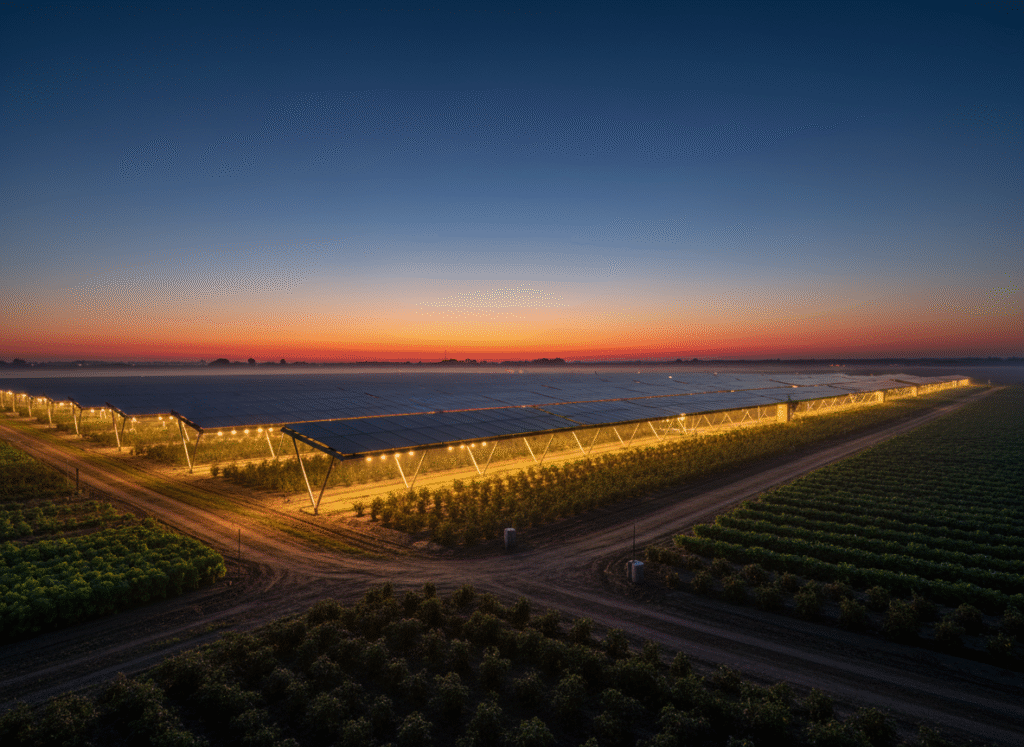
Large agricultural sites often include long access roads and internal pathways. Solar lighting in Agriculture ensures safe movement of workers, vehicles, and machinery after sunset, reducing accidents and improving logistics efficiency.
Solar Lighting for Greenhouses
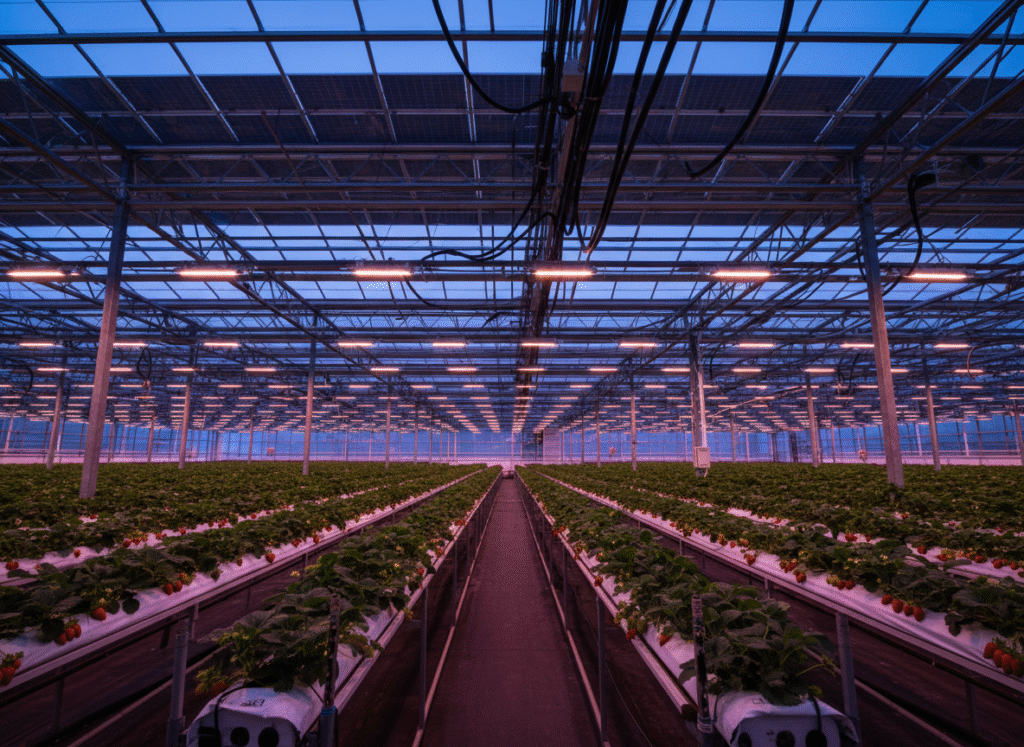
Greenhouses require controlled environments where lighting supports both operations and crop management. Solar lighting in Agriculture enables extended working hours while reducing electricity consumption.
When integrated with smart controls, solar lighting can support operational visibility without interfering with plant growth cycles.
Solar Lighting for Livestock Facilities
Livestock barns, feeding zones, and animal shelters benefit significantly from Solar Lighting in Agriculture. Proper illumination supports animal monitoring, feeding routines, and health inspections during nighttime hours.
Solar Lighting for Storage and Equipment Areas
Storage facilities and machinery sheds require reliable lighting for loading, unloading, and maintenance. Solar Lighting in Agriculture keeps these areas functional even in remote locations.
Solar Lighting for Security and Perimeter Protection
Agricultural fields and irrigation facilities are often spread across wide areas. Solar Lighting in Agriculture improves perimeter visibility, deters theft, and enhances security, especially when combined with motion sensors.
Real-World Projects Using Solar Lighting in Agriculture
Egypt – Solar-Powered Irrigation and Farm Lighting
In Egypt, Solar Lighting in Agriculture has been implemented as part of national initiatives supporting modern irrigation systems. Solar lighting is used around irrigation pump stations, water distribution points, and agricultural pathways, particularly in desert and reclaimed land projects.
These projects have reduced dependence on diesel generators, lowered operating costs, and improved nighttime safety for farmers.
India – Solar Irrigation and Agricultural Lighting Programs
India has widely adopted Solar Lighting in Agriculture through government-supported renewable energy programs. In states such as Rajasthan and Gujarat, solar lighting systems are installed around irrigation pumps, farmland access roads, and storage areas.
These projects have improved irrigation efficiency, reduced electricity subsidies, and increased productivity in rural farming communities.
Morocco – Solar Agriculture Projects
In Morocco, Solar Lighting has been integrated into irrigation and agricultural development programs led by MASEN. Solar lighting supports irrigation control points, greenhouse facilities, and rural farm infrastructure, particularly in off-grid regions.
The projects contribute to water conservation and long-term energy sustainability.
FAO-Supported Projects in Africa
The Food and Agriculture Organization (FAO) has implemented Solar Lighting across several African countries, including Kenya, Ethiopia, and Sudan. These projects combine solar-powered irrigation with lighting for night-time agricultural operations.
The result has been increased working hours, improved farm safety, and enhanced food security in rural communities.
Southern Europe – Italy and Spain
In Italy and Spain, Solar Lighting in Agriculture is used in vineyards and olive farms to illuminate pathways, harvesting zones, and temporary storage areas. These projects support sustainable agriculture while reducing grid energy consumption in rural regions.
Benefits of Solar Lighting in Agriculture
Energy Efficiency and Cost Reduction
Solar Lighting eliminates ongoing electricity costs associated with outdoor and agricultural lighting. After installation, operating expenses remain minimal.
Environmental Sustainability
By using renewable solar energy, Solar Lighting in Agriculture reduces greenhouse gas emissions and supports climate-friendly farming practices.
Reliability in Remote Areas
Solar lighting systems continue operating even during grid outages, making Solar Lighting highly reliable for rural and off-grid applications.
Low Maintenance Requirements
With fewer moving parts and durable LED technology, Solar Lighting in Agriculture requires limited maintenance compared to conventional systems.
Design Considerations for Solar Lighting in Agriculture
To ensure reliable performance, Solar Lighting systems must be properly designed. Key considerations include:
- Local solar radiation levels
- Battery capacity and autonomy
- Mounting height and fixture placement
- Required illumination levels
- Environmental resistance to dust, heat, and moisture
Proper system sizing ensures consistent performance throughout the year.
Challenges and Limitations
While Solar Lighting offers many benefits, it also presents challenges. Reduced sunlight during winter months and higher upfront costs can affect performance if systems are poorly designed.
These limitations can be mitigated through proper planning, battery sizing, and component selection.
Future Outlook for Solar Lighting in Agriculture
Advances in battery storage, LED efficiency, and smart control technologies are expanding the capabilities of Solar Lighting in Agriculture. Future systems are expected to integrate with smart irrigation platforms and agricultural automation systems.
Conclusion
Solar Lighting in Agriculture is a proven and practical solution that enhances safety, productivity, and sustainability in modern farming and irrigation systems. Through real-world projects across Egypt, Africa, Asia, and Europe, Solar Lighting in Agriculture has demonstrated measurable economic and environmental benefits.
For agricultural operations seeking long-term efficiency and energy independence, Solar Lighting in Agriculture represents a strategic and reliable investment.
Sources:
Suggestr