Choosing lighting is not only about brightness.
In Egypt, the real problem is power outages.
When electricity fails, normal lights stop working immediately.
That creates danger for homes, offices, factories, and commercial buildings.
This is why Battery Backup Lighting becomes necessary.
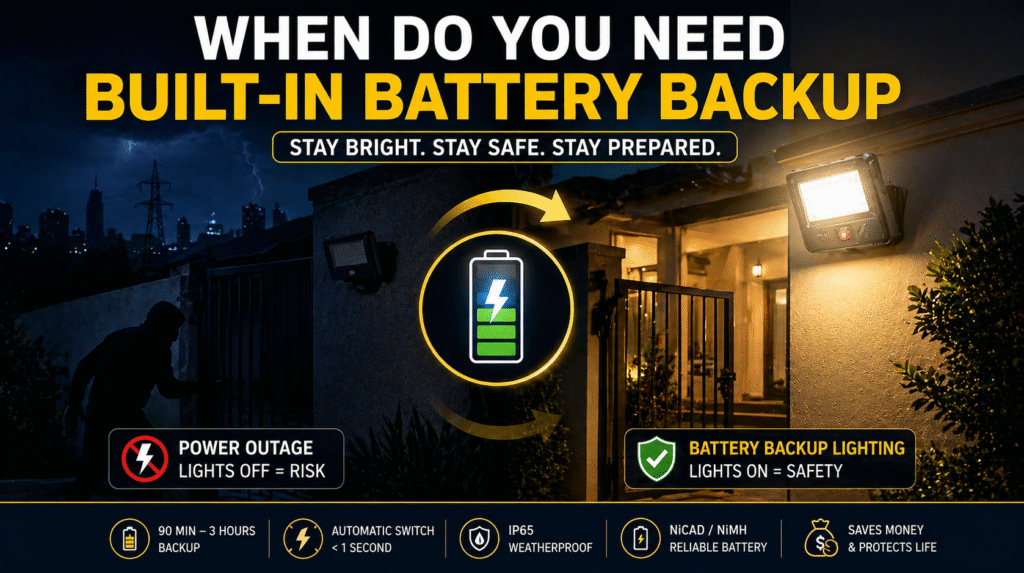
Battery Backup Lighting keeps the light working automatically during power cuts.
It protects people, improves security, and helps buildings stay safe until electricity returns.
Most systems work for 90 minutes to 3 hours without external power.
That makes Battery Backup Lighting one of the most important safety investments in 2026.
Egypt Power Reality (2026)
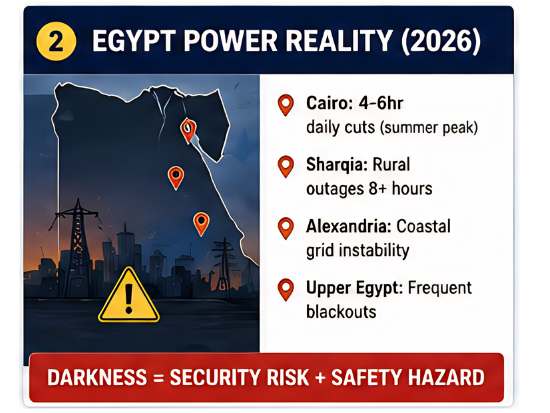
Power interruptions are common in many areas.
Examples:
- Cairo: daily summer peak cuts
- Sharqia: long rural outages
- Alexandria: coastal grid instability
- Upper Egypt: repeated blackouts
The result is simple:
Darkness creates:
- security risks
- theft opportunities
- unsafe evacuation
- business interruption
- accidents in factories and warehouses
This is why Battery Backup Lighting is no longer optional.
It is necessary.
5 Situations That Need Battery Backup Lighting
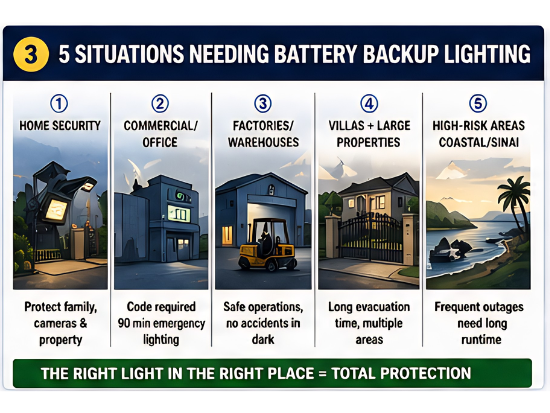
Not every place has the same risk level.
Some places need Battery Backup Lighting more than others.
1. Home Security
This is the most common use.
When the garden, gate, or driveway becomes dark, security drops immediately.
Dark outdoor areas make theft easier.
Why It Matters
Battery Backup Lighting helps by:
- keeping floodlights on
- supporting security cameras
- maintaining motion sensor operation
- protecting family movement at night
Example
Two 50W Battery Backup Lighting units can cover around 100 square meters of outdoor area.
This is enough for many homes and villas.
2. Commercial Buildings and Offices
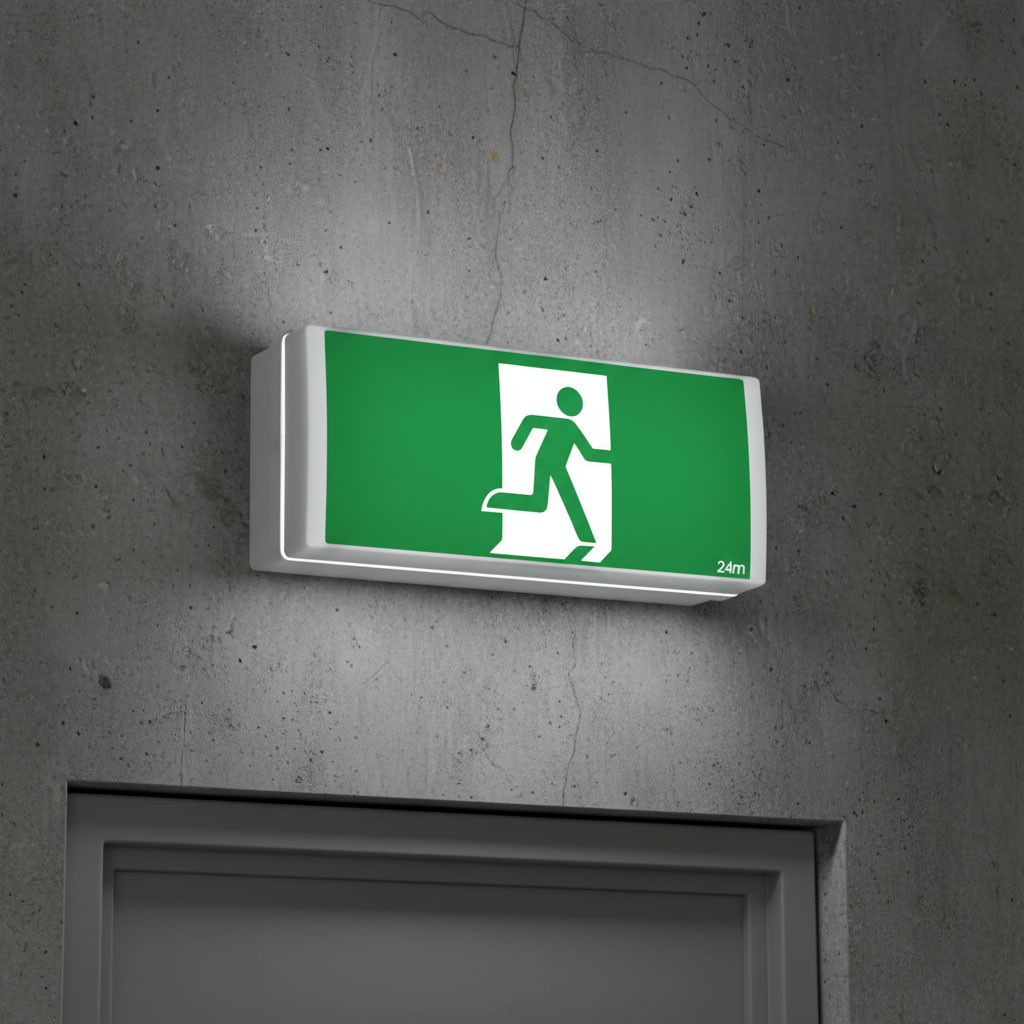
Emergency lighting is often required by building safety standards.
This is especially important for:
- stairwells
- emergency exits
- underground parking
- office entrances
- shared corridors
Why It Matters
Battery Backup Lighting helps by:
- keeping evacuation routes visible
- reducing panic during outages
- protecting employees and visitors
- reducing business interruption
Standard Runtime
Minimum required runtime is usually:
90 minutes
This is the standard for many emergency systems.
3. Factories and Warehouses
Industrial areas become dangerous when lights suddenly fail.
Forklifts, machines, and workers need visibility.
Why It Matters
Battery Backup Lighting helps by:
- preventing accidents
- keeping warehouse aisles visible
- allowing safe shutdown procedures
- protecting inventory access
Recommended Runtime
Factories usually need:
180 minutes or more
Because operations take longer to stop safely.
4. Villas and Large Properties
Large homes need more emergency coverage.
Evacuation takes longer.
Outdoor movement becomes difficult without lighting.
Why It Matters
Battery Backup Lighting should cover:
- gates
- swimming pools
- driveways
- gardens
- side entrances
- service areas
This protects both family members and workers inside the property.
5. High-Risk Areas
Some areas have longer and more frequent outages.
Examples include:
- coastal cities
- desert areas
- Sinai
- remote villages
Why It Matters
These areas need stronger systems.
Recommended:
- IP65 housing
- corrosion resistance
- 180-minute runtime minimum
This makes Battery Backup Lighting suitable for difficult environments.
How Battery Backup Lighting Works
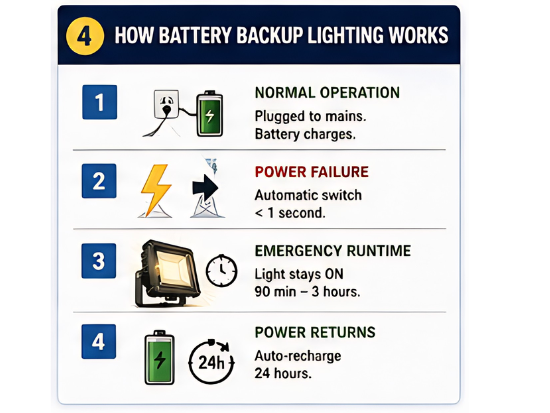
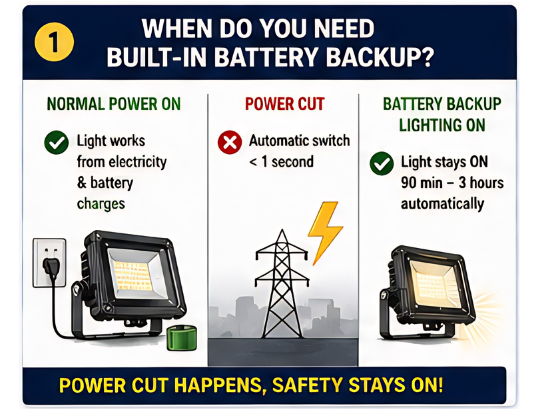
The system works automatically.
No manual action is needed.
Step 1: Normal Operation
The light is connected to main electricity.
At the same time, the internal battery charges.
Step 2: Power Failure
When electricity stops:
Automatic switching happens in less than 1 second.
The battery starts supplying power.
The light stays on.
Step 3: Emergency Runtime
The light continues working for:
- 90 minutes
- 180 minutes
- up to 3 hours
depending on battery type and system design.
Step 4: Power Returns
When electricity comes back:
The system switches automatically to normal mode.
Battery recharge starts immediately.
Full recharge usually takes:
24 hours
Battery Types
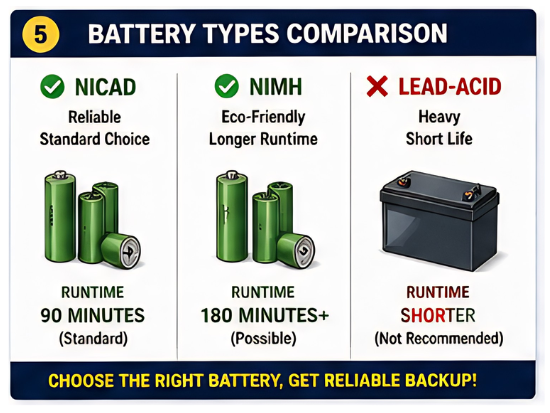
Not all batteries perform the same way.
NiCad
Best for standard emergency systems
Advantages:
- reliable
- stable
- common in buildings
Standard runtime:
90 minutes minimum
NiMH
Better for longer backup periods
Advantages:
- eco-friendly
- longer runtime possible
Can reach:
180 minutes or more
Lead-Acid
Usually not preferred
Problems:
- heavy
- shorter lifetime
- more maintenance
Most modern systems avoid it.
Cost vs Benefit
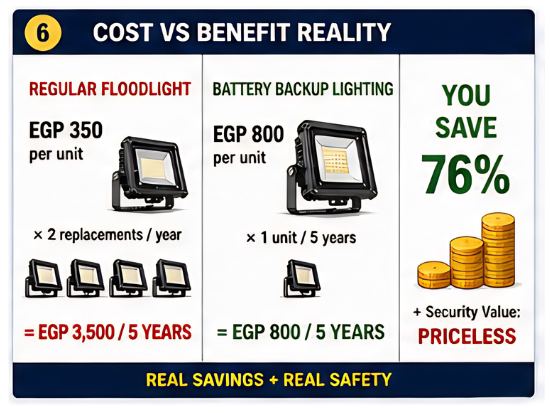
Many people think Battery Backup Lighting is expensive.
Actually, it saves money.
5-Year Cost Example
Regular Floodlight
Price:
350 EGP
Frequent replacement needed
Example:
2 replacements each year
Total in 5 years:350×10=3500 EGP350 \times 10 = 3500 \text{ EGP}350×10=3500 EGP
Battery Backup Lighting
Price:
800 EGP
Only one good unit needed
Total:800×1=800 EGP800 \times 1 = 800 \text{ EGP}800×1=800 EGP
Final Result
Savings:76%76\%76%
plus:
- better safety
- stronger security
- less maintenance
- no sudden darkness
This makes Battery Backup Lighting a smart investment.
Perfect Battery Backup Lighting Specifications
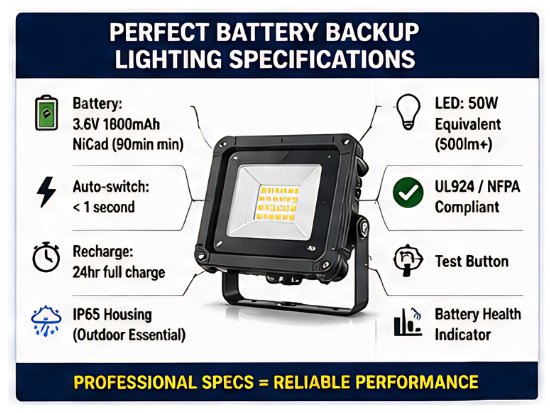
Before buying, check these details carefully.
Recommended Features
- Battery: 3.6V 1800mAh NiCad minimum
- Runtime: 90 minutes minimum
- Auto-switch: less than 1 second
- Recharge time: 24 hours
- IP65 housing for outdoor use
- LED brightness: 500 lumens or more
- Test button included
- Battery health indicator
- UL924 or NFPA compliance
- Aluminum body preferred
These are the signs of a professional system.
Runtime Guide
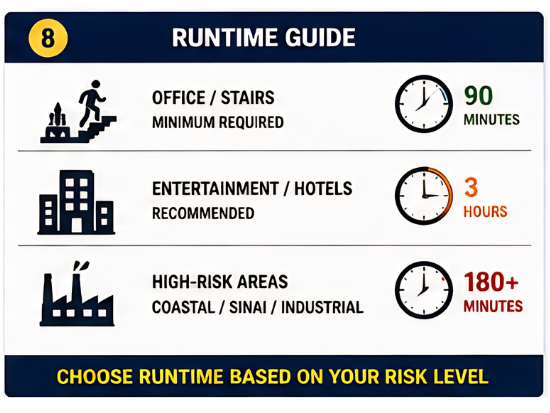
Different places need different backup times.
| Location | Recommended Runtime |
|---|---|
| Office / Stairs | 90 minutes |
| Apartment Building | 90 minutes |
| Hotels / Entertainment | 180 minutes |
| Factory / Warehouse | 180 minutes |
| Villas / Large Homes | 180+ minutes |
Choose runtime based on evacuation needs.
Do Not Buy Without These Features
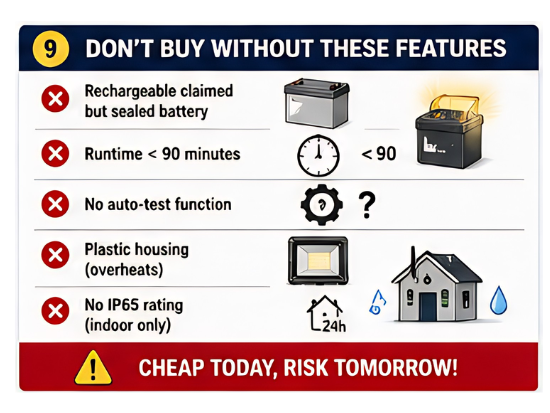
Avoid products with these problems:
- claimed rechargeable but sealed weak battery
- runtime less than 90 minutes
- no auto-test function
- plastic housing only
- no IP65 protection
- no battery indicator
- no real warranty
These usually fail during real emergencies.
Top Applications
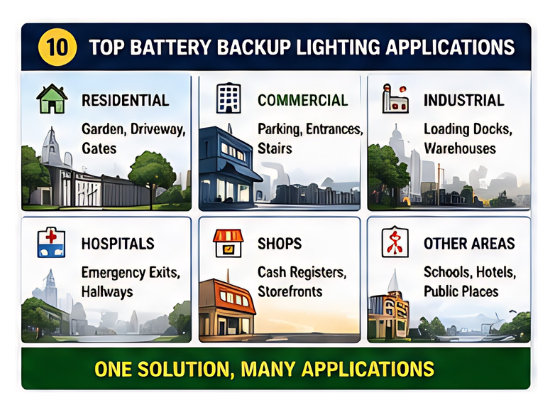
Battery Backup Lighting works in many places.
Residential
- gardens
- gates
- driveways
- rooftops
Commercial
- entrances
- parking areas
- staircases
- corridors
Industrial
- warehouses
- loading docks
- production floors
Medical
- hospitals
- emergency exits
- hallways
Retail
- shops
- storefronts
- cashier areas
Almost every building benefits from it.
Quick Decision Table
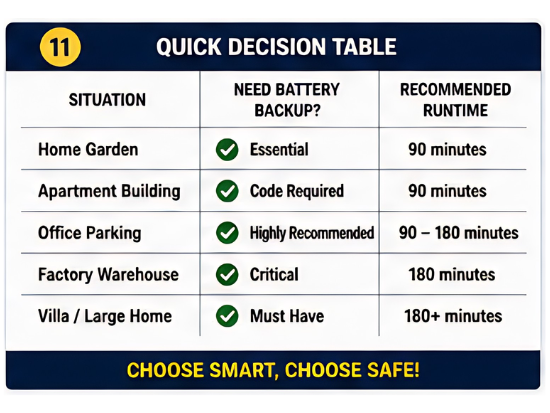
This table helps fast decision making.
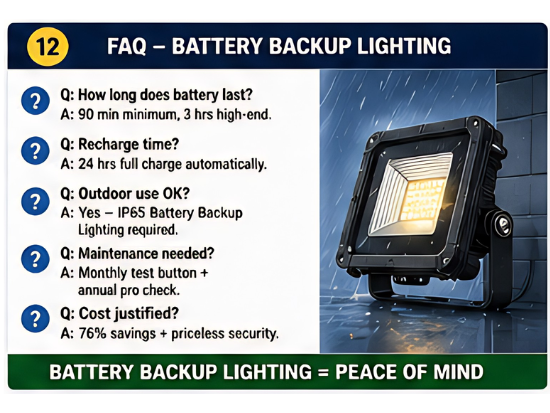
FAQ
Final Conclusion
Battery Backup Lighting is not a luxury.
It is protection.
It keeps people safe.
It protects homes and businesses.
It prevents accidents.
It reduces long-term cost.
It improves peace of mind.
In Egypt 2026:
Power cuts are reality.
Battery Backup Lighting is safety insurance.
Sources :
- Battery Backup Emergency Light Guide
- ELF-FL Emergency Floodlight Specifications
- Battery Backup vs Traditional Emergency Lights